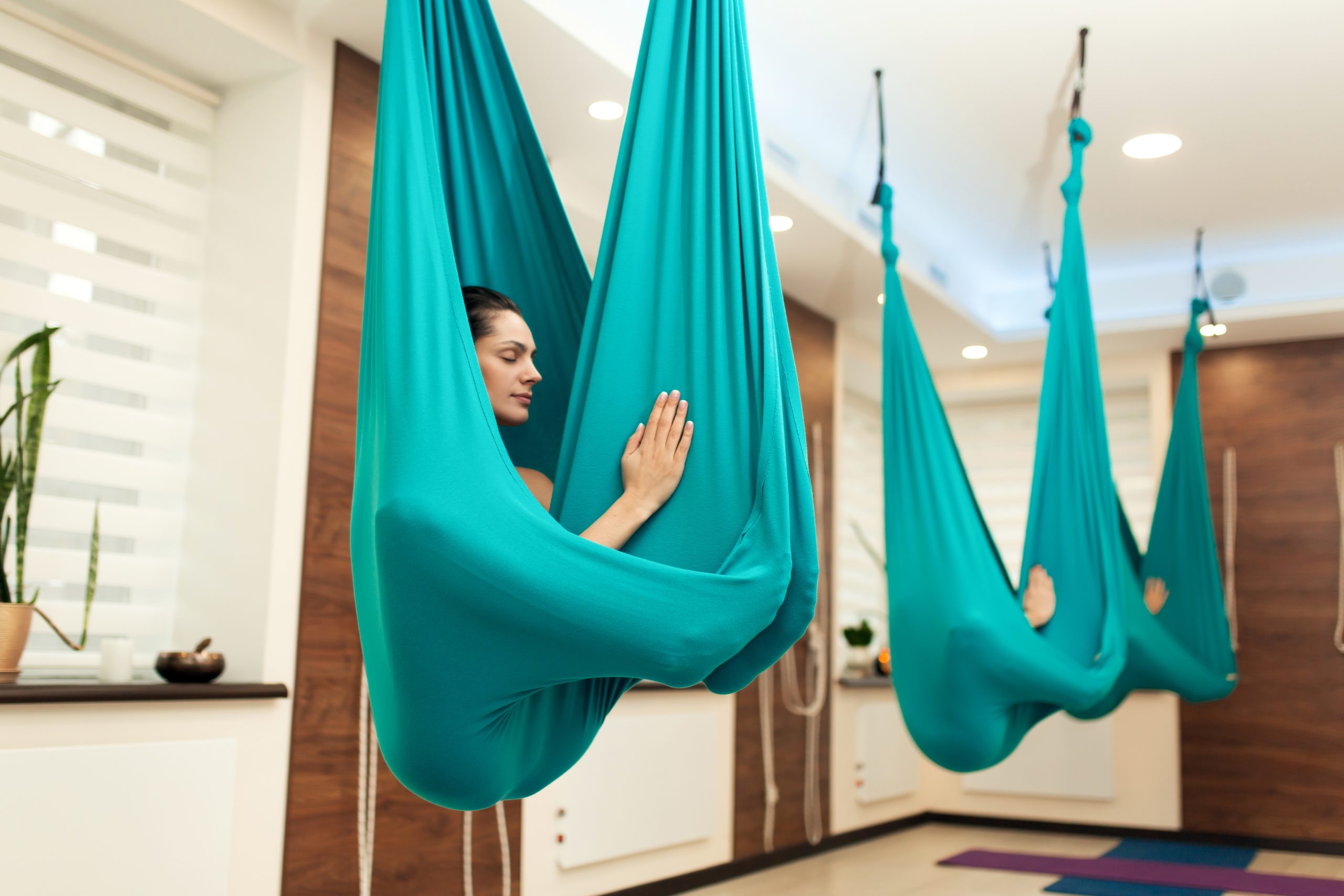
aerial yoga hammocks

aerial yoga hammock – frequently asked questions

choosing the right hammock
1) what size aerial yoga hammock do i need?

the right size depends on your ceiling height and how you want to use the hammock. for typical home practice with 2.2-3 meter ceilings, a 5-6 meter hammock works best. the 5-meter length is considered optimal for versatility—shorter ones limit your exercise options, while longer ones become cumbersome in normal room heights.
2) what’s the weight capacity of an aerial yoga hammock?
our hammock supports static load capacity up to 1200 kg and dynamic load of approximately 120 kg. in practical terms, this means two practitioners weighing up to 120 kg combined can safely practice together.
3) what fabric is best for aerial yoga?
polyamide (nylon) is the preferred fabric for aerial yoga hammocks because it’s soft on the skin, durable, and stretches sideways for comfort without excessive sagging. look for high-quality nylon that stretches width-wise but maintains its length. avoid cheap parachute materials that don’t stretch properly and can cause bruising.
4) what does “single point” vs “double point” hammock mean?
single carabiner setup: one hanging point attached to a single ceiling mount for stable, centered suspension. ideal for beginners, solo practice, and straightforward setup. creates a single attachment point directly above your center.
dual carabiner setup: two hanging points attached to separate ceiling mounts for enhanced stability, reduced swing, and greater control. recommended for partner practice, therapeutic sessions, and studios requiring maximum security. distributes load across two points—perfect for advanced practitioners.
5) is a single point or double point better for beginners?
either works for beginners—it depends on your goals. for yoga-based practice and fitness, a double-point hammock is the best choice. if you want to learn circus-style movements, practice alone, a single-point is better.

installation and rigging
6) what ceiling height do i need?

minimum ceiling height is 2.2 meters, though 2.6-2.8 meters is more comfortable for practice. you need to hang the hammock at hip height while having room space for your movements and extensions.
7) what do i need to install a hammock at home?
to install safely, you’ll need:
• concrete ceiling, a sturdy ceiling beam, wooden joists, or professional aerial rig that can support at least 500 kg per attachment point
• proper ceiling hooks or rigging plates rated for dynamic loads
• carabiners (typically 22kn strength or higher)
• strops or extension belts, if needed for height adjustment
• a structural engineer’s assessment to confirm your ceiling can support the dynamic forces
8) can i install a hammock to my drywall ceiling?
no. drywall alone cannot safely support an aerial hammock. you need to attach to structural elements like wooden beams, concrete, or steel. consult a licensed builder or structural engineer to identify the right attachment point in your ceiling.
9) what distance should rigging points be apart?
rigging points should be shoulder-width apart, typically 40-60 cm. most installations use about 50 cm spacing.
10) how much floor space do i need?
in studio you’ll need at least a 3.5-meter diameter clear area around your hammock, or ideally 2 meters in front and behind the rigging points with 100 cm on each side. at home you need to have enough space to fully stretch yourself horizotally.

care and maintenance
11) how do i wash my aerial yoga hammock?

follow these guidelines to keep your hammock clean:
• wash individually in a washing machine—never with other clothes
• use a gentle wash cycle at 30°C (for delicate fabrics) or 40°C (for tougher stains)
• use a gentle, mild detergent only
• avoid bleach, fabric softener, and aggressive stain removers
• never use a dryer—heat damages synthetic fibers
• hang dry in a well-ventilated area, away from direct sunlight
• remove all carabiners, chains, and hardware before washing
• wash in a mesh bag if using a top-loading machine to prevent snagging
12) how often should i wash my hammock?
wash only when necessary. frequent washing can degrade the fabric over time. wash after intense training sessions or when visibly soiled.
13) can i dry my hammock in a dryer?
no. machine dryers use heat that damages synthetic nylon and polyester fibers, making them unsafe for use. always air dry in a shaded, well-ventilated space.
14) does my hammock need special storage?
store your hammock in a clean, dry space away from direct sunlight. uv rays can fade colors and damage the material. remove all hardware before storage if possible.
15) how do i inspect my hammock for damage?
regularly inspect for snags, holes, puckering, or damaged areas. check after washing and before each use. any puckering could indicate internal damage that compromises safety. stop using immediately if you find significant damage and have it professionally assessed.
16) how long does an aerial yoga hammock last?
with proper care and maintenance, a quality aerial yoga hammock lasts many years. lifespan depends on fabric quality, frequency of use, washing practices, and storage conditions. quality products often come with 1-year warranties or longer.

troubleshooting and safety
17) what if my hammock gets an electrical charge?

this can happen in rare cases due to friction with synthetic fibers. simply run a wash cycle—the electrical charge will resolve itself.
18) what causes bruising in aerial yoga?
bruising often occurs from uneven pressure distribution where the hammock fabric presses on your body. use padding with blankets or yoga mats to distribute pressure over a broader surface. simply folding the fabric in half or quarters can also change support and reduce bruising.
19) how do i avoid fabric burns?
fabric burns happen from friction against the rope-like parts of the hammock. use padding and avoid wearing bare skin directly against the fabric. long sleeves or leggings help reduce friction.

20) can i return it if it doesn’t work out?
yes – 14-day money-back guarantee.
guarantee details:
• full refund within 14 days
• equipment must be in original condition (no signs of use)
• you can inspect and test the product, but it cannot show wear, marks, or usage traces
• if equipment is unused and in resellable condition, full refund applies
• simple email process to initiate return
important: this guarantee covers defects or dissatisfaction with product quality. once the product shows signs of use or wear, it cannot be returned for refund (as it’s no longer resellable as new).
best for: peace of mind – inspect risk-free within 14 days.

aerial yoga hammock – frequently asked questions

choosing the right hammock
1) what size aerial yoga hammock do i need?

the right size depends on your ceiling height and how you want to use the hammock. for typical home practice with 2.2-3 meter ceilings, a 5-6 meter hammock works best. the 5-meter length is considered optimal for versatility—shorter ones limit your exercise options, while longer ones become cumbersome in normal room heights.
2) what’s the weight capacity of an aerial yoga hammock?
our hammock supports static load capacity up to 1200 kg and dynamic load of approximately 120 kg. in practical terms, this means two practitioners weighing up to 120 kg combined can safely practice together.
3) what fabric is best for aerial yoga?
polyamide (nylon) is the preferred fabric for aerial yoga hammocks because it’s soft on the skin, durable, and stretches sideways for comfort without excessive sagging. look for high-quality nylon that stretches width-wise but maintains its length. avoid cheap parachute materials that don’t stretch properly and can cause bruising.
4) what does “single point” vs “double point” hammock mean?
single carabiner setup: one hanging point attached to a single ceiling mount for stable, centered suspension. ideal for beginners, solo practice, and straightforward setup. creates a single attachment point directly above your center.
dual carabiner setup: two hanging points attached to separate ceiling mounts for enhanced stability, reduced swing, and greater control. recommended for partner practice, therapeutic sessions, and studios requiring maximum security. distributes load across two points—perfect for advanced practitioners.
5) is a single point or double point better for beginners?
either works for beginners—it depends on your goals. for yoga-based practice and fitness, a double-point hammock is the best choice. if you want to learn circus-style movements, practice alone, a single-point is better.

installation and rigging
6) what ceiling height do i need?

minimum ceiling height is 2.2 meters, though 2.6-2.8 meters is more comfortable for practice. you need to hang the hammock at hip height while having room space for your movements and extensions.
7) what do i need to install a hammock at home?
to install safely, you’ll need:
• concrete ceiling, a sturdy ceiling beam, wooden joists, or professional aerial rig that can support at least 500 kg per attachment point
• proper ceiling hooks or rigging plates rated for dynamic loads
• carabiners (typically 22kn strength or higher)
• strops or extension belts, if needed for height adjustment
• a structural engineer’s assessment to confirm your ceiling can support the dynamic forces
8) can i install a hammock to my drywall ceiling?
no. drywall alone cannot safely support an aerial hammock. you need to attach to structural elements like wooden beams, concrete, or steel. consult a licensed builder or structural engineer to identify the right attachment point in your ceiling.
9) what distance should rigging points be apart?
rigging points should be shoulder-width apart, typically 40-60 cm. most installations use about 50 cm spacing.
10) how much floor space do i need?
in studio you’ll need at least a 3.5-meter diameter clear area around your hammock, or ideally 2 meters in front and behind the rigging points with 100 cm on each side. at home you need to have enough space to fully stretch yourself horizotally.

care and maintenance
11) how do i wash my aerial yoga hammock?

follow these guidelines to keep your hammock clean:
• wash individually in a washing machine—never with other clothes
• use a gentle wash cycle at 30°C (for delicate fabrics) or 40°C (for tougher stains)
• use a gentle, mild detergent only
• avoid bleach, fabric softener, and aggressive stain removers
• never use a dryer—heat damages synthetic fibers
• hang dry in a well-ventilated area, away from direct sunlight
• remove all carabiners, chains, and hardware before washing
• wash in a mesh bag if using a top-loading machine to prevent snagging
12) how often should i wash my hammock?
wash only when necessary. frequent washing can degrade the fabric over time. wash after intense training sessions or when visibly soiled.
13) can i dry my hammock in a dryer?
no. machine dryers use heat that damages synthetic nylon and polyester fibers, making them unsafe for use. always air dry in a shaded, well-ventilated space.
14) does my hammock need special storage?
store your hammock in a clean, dry space away from direct sunlight. uv rays can fade colors and damage the material. remove all hardware before storage if possible.
15) how do i inspect my hammock for damage?
regularly inspect for snags, holes, puckering, or damaged areas. check after washing and before each use. any puckering could indicate internal damage that compromises safety. stop using immediately if you find significant damage and have it professionally assessed.
16) how long does an aerial yoga hammock last?
with proper care and maintenance, a quality aerial yoga hammock lasts many years. lifespan depends on fabric quality, frequency of use, washing practices, and storage conditions. quality products often come with 1-year warranties or longer.

troubleshooting and safety
17) what if my hammock gets an electrical charge?

this can happen in rare cases due to friction with synthetic fibers. simply run a wash cycle—the electrical charge will resolve itself.
18) what causes bruising in aerial yoga?
bruising often occurs from uneven pressure distribution where the hammock fabric presses on your body. use padding with blankets or yoga mats to distribute pressure over a broader surface. simply folding the fabric in half or quarters can also change support and reduce bruising.
19) how do i avoid fabric burns?
fabric burns happen from friction against the rope-like parts of the hammock. use padding and avoid wearing bare skin directly against the fabric. long sleeves or leggings help reduce friction.

20) can i return it if it doesn’t work out?
yes – 14-day money-back guarantee.
guarantee details:
• full refund within 14 days
• equipment must be in original condition (no signs of use)
• you can inspect and test the product, but it cannot show wear, marks, or usage traces
• if equipment is unused and in resellable condition, full refund applies
• simple email process to initiate return
important: this guarantee covers defects or dissatisfaction with product quality. once the product shows signs of use or wear, it cannot be returned for refund (as it’s no longer resellable as new).
best for: peace of mind – inspect risk-free within 14 days.

sort by:

aerial yoga hammock – frequently asked questions

choosing the right hammock
1) what size aerial yoga hammock do i need?

the right size depends on your ceiling height and how you want to use the hammock. for typical home practice with 2.2-3 meter ceilings, a 5-6 meter hammock works best. the 5-meter length is considered optimal for versatility—shorter ones limit your exercise options, while longer ones become cumbersome in normal room heights.
2) what’s the weight capacity of an aerial yoga hammock?
our hammock supports static load capacity up to 1200 kg and dynamic load of approximately 120 kg. in practical terms, this means two practitioners weighing up to 120 kg combined can safely practice together.
3) what fabric is best for aerial yoga?
polyamide (nylon) is the preferred fabric for aerial yoga hammocks because it’s soft on the skin, durable, and stretches sideways for comfort without excessive sagging. look for high-quality nylon that stretches width-wise but maintains its length. avoid cheap parachute materials that don’t stretch properly and can cause bruising.
4) what does “single point” vs “double point” hammock mean?
single carabiner setup: one hanging point attached to a single ceiling mount for stable, centered suspension. ideal for beginners, solo practice, and straightforward setup. creates a single attachment point directly above your center.
dual carabiner setup: two hanging points attached to separate ceiling mounts for enhanced stability, reduced swing, and greater control. recommended for partner practice, therapeutic sessions, and studios requiring maximum security. distributes load across two points—perfect for advanced practitioners.
5) is a single point or double point better for beginners?
either works for beginners—it depends on your goals. for yoga-based practice and fitness, a double-point hammock is the best choice. if you want to learn circus-style movements, practice alone, a single-point is better.

installation and rigging
6) what ceiling height do i need?

minimum ceiling height is 2.2 meters, though 2.6-2.8 meters is more comfortable for practice. you need to hang the hammock at hip height while having room space for your movements and extensions.
7) what do i need to install a hammock at home?
to install safely, you’ll need:
• concrete ceiling, a sturdy ceiling beam, wooden joists, or professional aerial rig that can support at least 500 kg per attachment point
• proper ceiling hooks or rigging plates rated for dynamic loads
• carabiners (typically 22kn strength or higher)
• strops or extension belts, if needed for height adjustment
• a structural engineer’s assessment to confirm your ceiling can support the dynamic forces
8) can i install a hammock to my drywall ceiling?
no. drywall alone cannot safely support an aerial hammock. you need to attach to structural elements like wooden beams, concrete, or steel. consult a licensed builder or structural engineer to identify the right attachment point in your ceiling.
9) what distance should rigging points be apart?
rigging points should be shoulder-width apart, typically 40-60 cm. most installations use about 50 cm spacing.
10) how much floor space do i need?
in studio you’ll need at least a 3.5-meter diameter clear area around your hammock, or ideally 2 meters in front and behind the rigging points with 100 cm on each side. at home you need to have enough space to fully stretch yourself horizotally.

care and maintenance
11) how do i wash my aerial yoga hammock?

follow these guidelines to keep your hammock clean:
• wash individually in a washing machine—never with other clothes
• use a gentle wash cycle at 30°C (for delicate fabrics) or 40°C (for tougher stains)
• use a gentle, mild detergent only
• avoid bleach, fabric softener, and aggressive stain removers
• never use a dryer—heat damages synthetic fibers
• hang dry in a well-ventilated area, away from direct sunlight
• remove all carabiners, chains, and hardware before washing
• wash in a mesh bag if using a top-loading machine to prevent snagging
12) how often should i wash my hammock?
wash only when necessary. frequent washing can degrade the fabric over time. wash after intense training sessions or when visibly soiled.
13) can i dry my hammock in a dryer?
no. machine dryers use heat that damages synthetic nylon and polyester fibers, making them unsafe for use. always air dry in a shaded, well-ventilated space.
14) does my hammock need special storage?
store your hammock in a clean, dry space away from direct sunlight. uv rays can fade colors and damage the material. remove all hardware before storage if possible.
15) how do i inspect my hammock for damage?
regularly inspect for snags, holes, puckering, or damaged areas. check after washing and before each use. any puckering could indicate internal damage that compromises safety. stop using immediately if you find significant damage and have it professionally assessed.
16) how long does an aerial yoga hammock last?
with proper care and maintenance, a quality aerial yoga hammock lasts many years. lifespan depends on fabric quality, frequency of use, washing practices, and storage conditions. quality products often come with 1-year warranties or longer.

troubleshooting and safety
17) what if my hammock gets an electrical charge?

this can happen in rare cases due to friction with synthetic fibers. simply run a wash cycle—the electrical charge will resolve itself.
18) what causes bruising in aerial yoga?
bruising often occurs from uneven pressure distribution where the hammock fabric presses on your body. use padding with blankets or yoga mats to distribute pressure over a broader surface. simply folding the fabric in half or quarters can also change support and reduce bruising.
19) how do i avoid fabric burns?
fabric burns happen from friction against the rope-like parts of the hammock. use padding and avoid wearing bare skin directly against the fabric. long sleeves or leggings help reduce friction.

20) can i return it if it doesn’t work out?
yes – 14-day money-back guarantee.
guarantee details:
• full refund within 14 days
• equipment must be in original condition (no signs of use)
• you can inspect and test the product, but it cannot show wear, marks, or usage traces
• if equipment is unused and in resellable condition, full refund applies
• simple email process to initiate return
important: this guarantee covers defects or dissatisfaction with product quality. once the product shows signs of use or wear, it cannot be returned for refund (as it’s no longer resellable as new).
best for: peace of mind – inspect risk-free within 14 days.